What is The Lyocell Company by Sateri and what is its scale?
The Lyocell Company is Sateri’s lyocell fibre brand. Sateri manufactures the fibre, while APR is the international distributor and commercial partner bringing it to customers globally. Sateri and APR are members of the RGE group of companies. Sateri has an annual lyocell capacity of 400,000 tonnes, making it the world’s largest lyocell producer.
What is APR’s role in marketing lyocell by The Lyocell Company?
APR drives non-China sales, marketing and application development of lyocell produced through The Lycoell Company by Sateri. Sateri and APR are members of the RGE group of companies.
What are the best practices in production of lyocell that Sateri follows?
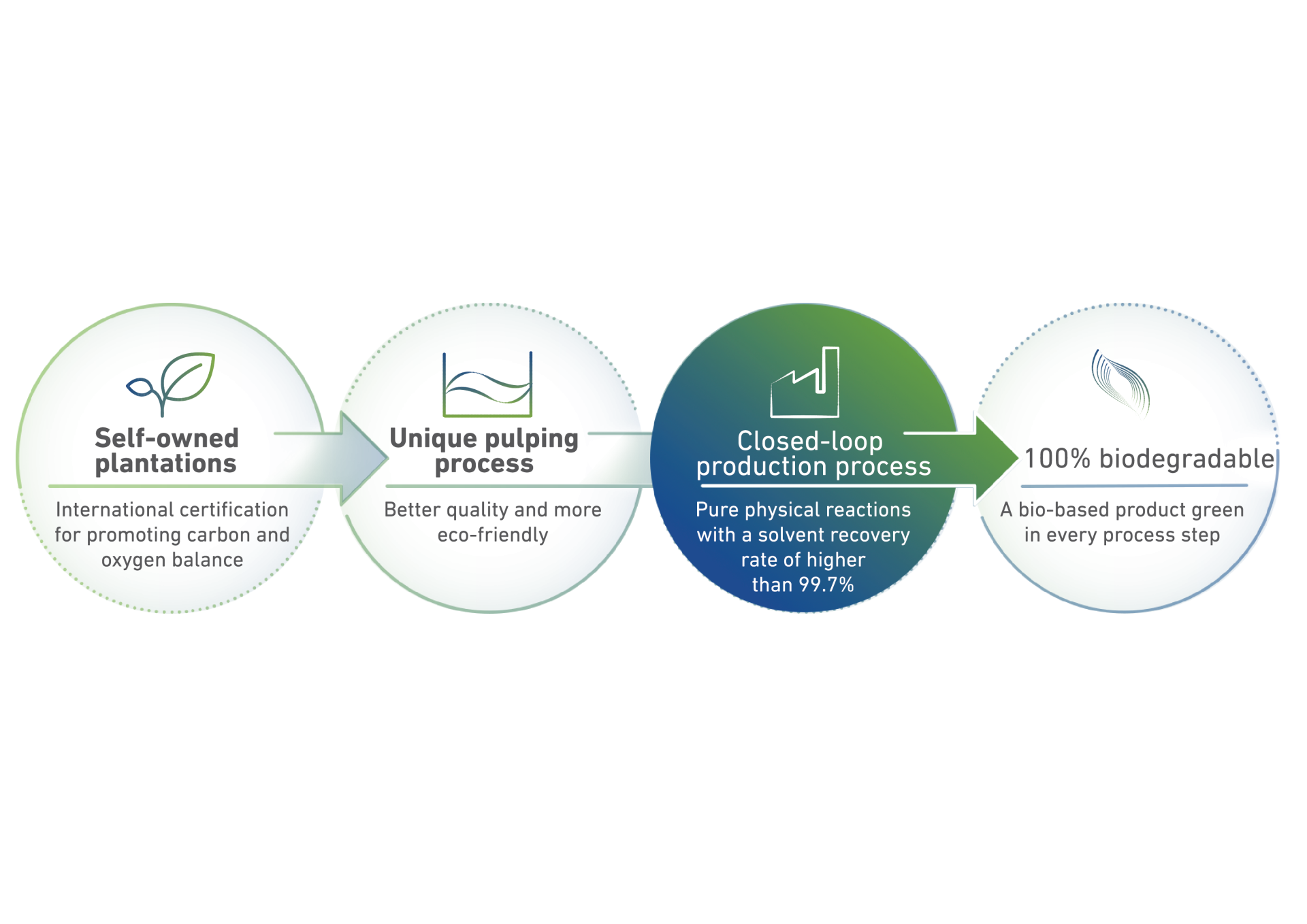
Sateri produces lyocell with closed-loop technology. In this efficient system, the organic solvent used to dissolve the wood pulp is recovered and continuously recycled at a rate of 99.7%, minimising waste and environmental impact.
Is lyocell fibre biodegradable?
Lyocell by The Lycocell Company is certified biodegradable within 28 days by TUV OK, ensuring it returns safely to the earth at the end of its lifecycle.
Can lyocell be blended with other fibres?
Yes, lyocell is highly versatile and blends effectively with natural fibres like cotton, linen, as well as synthetic fibres like polyester. Blending allows brands to create fabrics that maximise specific properties, such as durability, stretch, even cost efficiency.
How does APR fit into the lyocell supply chain?
APR is the international commercial link between Sateri’s lyocell production and global customers. Sateri manufactures the fibre, and APR distributes it internationally, managing customer engagement, contracting, and supply coordination from mill to market.